1. With religion the reason (or the excuse) for everything from 9/11 to the Tea Party, God has seen better decades. So, just as it was cool in the nineties to come out as gay, it was cool in the 2000s (especially for really smart people) to adopt another once-scandalous lifestyle choice: atheism. The non-believers were inspired by such prophets as Christopher Hitchens (who devised the term “the new atheism”) and Richard Dawkins. Hitchens’ book God is not Great: How Religion Poisons Everything was (as you might guess) an attack on religion, justifying the author’s own passionate atheism. This is like complaining against the management of the Elvis Presley Fan Club, and hence concluding that Elvis didn’t really exist.
Dawkins’ book The God Delusion at least spends some time arguing why God doesn’t exist, based mainly on Charles Darwin’s theories. Darwin would probably be surprised that atheists talk about him so much, because he himself was not an atheist. Sure, there’s good reason to criticize religion and promote science… but exactly how does that prove that God doesn’t exist? The new atheism might be cool, but it makes about as much sense as… as… well, religion.

2. This was one of the decade’s great television hits, for obvious reasons. “What this is really about is the American dream,” said the notorious British judge Simon Cowell, perhaps the biggest star to come out of the series (or at least the wealthiest). It inspired the nation so much that the 2004 finale drew more votes than any candidate in the US elections. It seems awesome, until you realize that the “American dream” consists of an incredibly prohibitive contract with the production company, 19 Entertainment. As Salon observed in 2002, “Their careers are literally not their own.” Kelly Clarkson, Carrie Underwood and the other winners (most of whom I’ve already forgotten) have no control over their images (and not enough control over their earnings), which is nothing unusual, but seems unfair considering their achievement: defeating thousands of hopefuls for… the right to be owned by a corporation. Considering the odds that were stacked against them, it would have been just as easy – and less soul-destroying – to win stardom in the usual way… whatever that is.

3. We’ve heard a lot about this in the past decade, as “liberals” apparently took control of the media. One of the first commentators to see this trend was former CBS journalist Bernard Goldberg. In Bias, his 2001 bestseller, he complained that the media constantly identified politicians and writers as “conservative”, without labeling their “liberal” counterparts. It’s the type of accusation that became more and more common among right-wing columnists and Fox News anchors –- but like other critics to make such claims, Goldberg didn’t back it up with facts. A few months after Bias was published, Geoffrey Nunberg, a commentator on the National Public Radio show Fresh Air, actually did some research. Nunberg looked up ten well-known politicians in thirty major US newspapers, coming back with 100,000 references. The result: the imbalance in labeling was on the other side. Liberals had a thirty per cent greater chance of being labeled than conservatives, even at “liberal” newspapers like the New York Times.

4. As if to prove that the economy was in bad shape, even Hollywood was crying poor in the past decade. The studios, which had thrived during the Great Depression, tightened their belts in the Great Recession. At the same time, however, they continually announced that box-office records had been broken – and not just records like “all time biggest box-office hit” (Avatar, in case you didn’t know). Any record, from “all time biggest Independence Day opening” (Spider-Man 2, if you really must know) to “all time most popular desert-based adventure” (The Mummy Returns). Of course, they didn’t adjust the numbers for inflation. So not only were these claims desperate, but they weren’t even accurate.
But perhaps the most ridiculous claim was “the most profitable movie of all time” – a title bestowed upon The Blair Witch Project for most of the decade, then passed on in 1999 to another ultra-low-budget screamer, Paranormal Activity. Technically, this claim was actually true. Paranormal Activity cost around $US15,000 to make. At time of writing, its worldwide earnings are $US107.9 million, so it’s made back its money 7,193 times over. It’s likely that no other movie has done that. If, say, Titanic had made 7,193 times its cost, it would have made more than $1.4 trillion (which is around 780 times the world record, and enough to run several nations). So even though about 300 movies made more money, Paranormal Activity is the most profitable. When it’s explained like that, of course, it doesn’t sound nearly as impressive.
But perhaps the most ridiculous claim was “the most profitable movie of all time” – a title bestowed upon The Blair Witch Project for most of the decade, then passed on in 1999 to another ultra-low-budget screamer, Paranormal Activity. Technically, this claim was actually true. Paranormal Activity cost around $US15,000 to make. At time of writing, its worldwide earnings are $US107.9 million, so it’s made back its money 7,193 times over. It’s likely that no other movie has done that. If, say, Titanic had made 7,193 times its cost, it would have made more than $1.4 trillion (which is around 780 times the world record, and enough to run several nations). So even though about 300 movies made more money, Paranormal Activity is the most profitable. When it’s explained like that, of course, it doesn’t sound nearly as impressive.

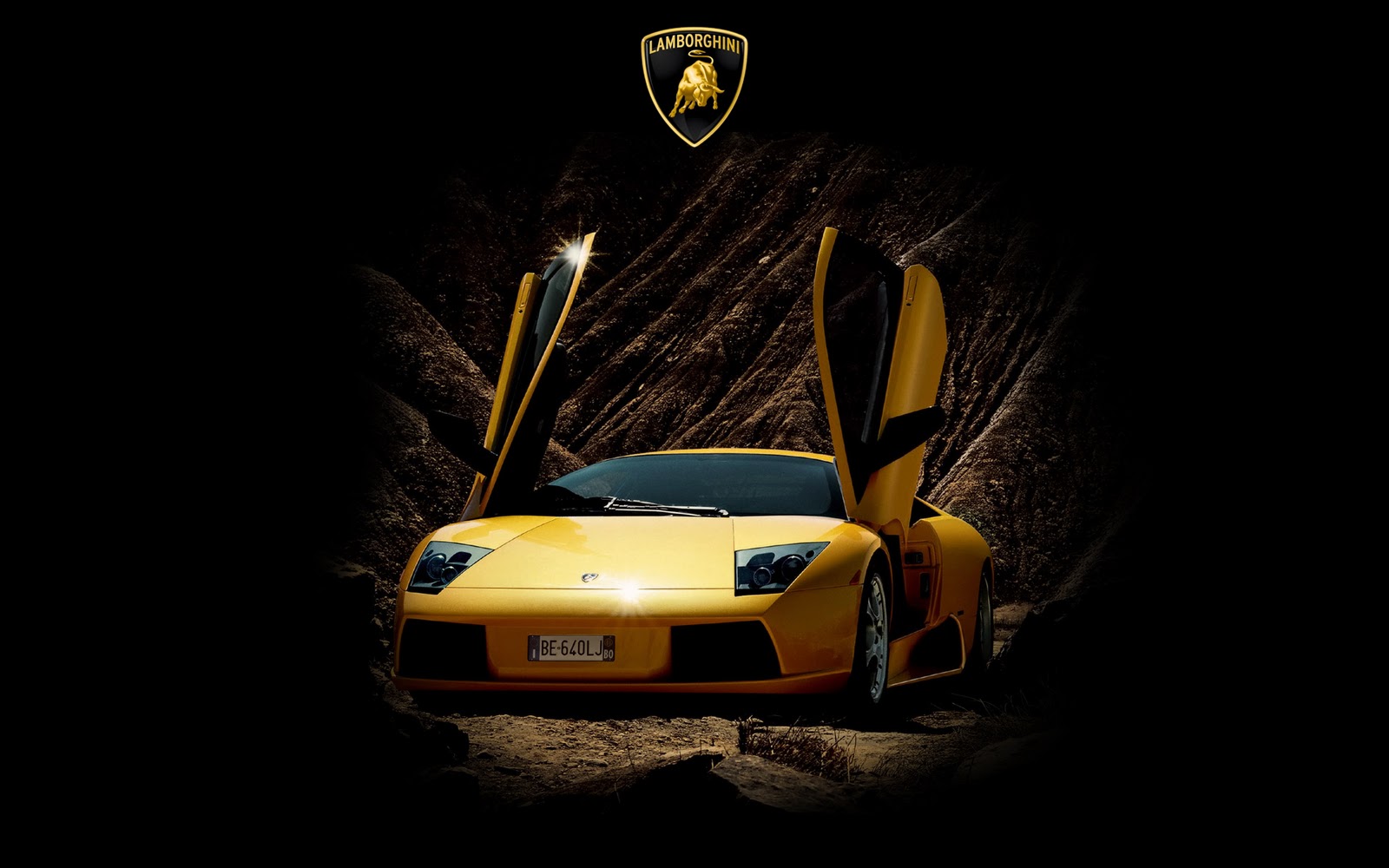
5. Every decade is defined by at least one motor vehicle. The flamboyant luxury cars of the Roaring Twenties, the stylish convertibles of the Sixties, the ultra-practical minibuses of the Eighties... And the must-have vehicle of the 2000s? Everyone wanted an SUV! Yes, while we went to war in the Middle East and oil prices went through the roof, while we worried about climate change, while technology for hybrid cars improved in leaps and bounds, we had a love affair with the most inefficient, gas-guzzling vehicles around. Even as we entered the global credit crisis, and once-proud SUV owners tried to sell them before they’d even had a chance to pay them off, the arrogant SUV was still meant to be a symbol of success. What were we thinking?

6. It’s like shooting fish in a barrel, right? Well, yes and no. In one sense, I would even say that this diva was underrated: someone whose undoubted talent (five octaves, for heaven’s sake!!!) was overshadowed by all the celebrity gossip. But she belongs on this list for another reason. In my previous slideshow, I introduced the egotistically-named Juddery’s Law: the theory that, once you say someone is “bigger than the Beatles”, you’ve gone overboard. It’s almost the same with Elvis Presley, though a couple of artists (the Beatles, for example) actually were bigger than Elvis. But the Mariah-hype went into overdrive in 2008, when she overtook Elvis by scoring her eighteenth chart-topper in the Billboard Hot 100. If you really stretch it, this made her the biggest solo artist in history!
Or maybe not. Sorry, but in Presley’s day, a record would have to sell a heck of a lot more units to make number one. And even if that wasn’t the case (which it was), Presley had already scored twelve top 10s before the Billboard Hot 100 had even started. Sure, Mariah’s big, but Elvis was The King.

7. It was one of news stories of 2009, as the H1N1 “swine flu” virus caused panic and fear throughout the world. On April 27, the World Health Organization soberly declared a Phase 4 level of severity for the dreaded virus. This was raised to Phase 5 just two days later, for no good reason aside from the fact that people were getting really scared. On June 11, it was raised to Phase 6 – pandemic levels! Such a speedy change usually means one thing: something was wrong with the data collection process. Instead of looking into this, the WHO predicted that up to two billion people – nearly one-third of the world’s population – could be infected within two years, and 4.9 billion doses of vaccine were required to stop the swine flu.
As the data called for the mass vaccination of half the US population, few people were aware that this worst-case data was being collected for the WHO by the Atlanta-based Center for Disease Control, which was working in the interests of the pharmaceutical industry. The fear might have been unnecessary, but it sold newspapers (and for the struggling print media, that was a godsend). This was, after all, the decade of scaring people with hyperbole. If we ever face a serious flu pandemic (and that might happen soon), let’s hope we can still trust the WHO.
As the data called for the mass vaccination of half the US population, few people were aware that this worst-case data was being collected for the WHO by the Atlanta-based Center for Disease Control, which was working in the interests of the pharmaceutical industry. The fear might have been unnecessary, but it sold newspapers (and for the struggling print media, that was a godsend). This was, after all, the decade of scaring people with hyperbole. If we ever face a serious flu pandemic (and that might happen soon), let’s hope we can still trust the WHO.

8. No wonder the global economic crisis was so bad. The 777-point stock-market decline of September 29, 2008 was the worst crash ever! No, seriously. As we were often reminded at the time, by a breathless media, it was a “record” crash, even worse than the infamous Black Thursday crash of October 1929. But if we talk percentages (which is the only sensible way to do it), the Great Crash of 2008 was less than seven per cent, whereas the crash of 1929 was 12.82 per cent. What does this mean? Not much, really. On their own, Wall Street crashes don’t lead to recessions (and certainly not to Great Depressions). Wall Street’s worst-ever crash actually happened on October 19, 1987, when the Dow Jones industrial lost 22.6 per cent of its value. But while that wasn’t exactly good news, it didn’t lead to the Great Depression II. The stock-market dive of 2008 was bad, but it wasn’t the worst thing ever.

9. OK, now I’ll admit this might seem ridiculous. Of all the celebrities I could include on this list, not him! Do I doubt that Phelps is the greatest swimmer in history? No, not really. I simply disagree with the chorus of people who call him the greatest Olympian – because it’s too soon to say that. Sure, nobody else ever won 14 gold medals – but it took Michael Johnson to put it into perspective. “If we could run the 200-metre [race] forwards and backwards, track-and-field athletes would’ve won a lot more medals,” said the 200-metre sprinting legend, who was getting a bit bored with all the Phelps-mania in Beijing. Dumb as this sounds, he did have a point. Swimmers, unlike most Olympians, can go home with multiple golds. Phelps won gold in freestyle races, butterfly races, individual medley races, freestyle relays (in which, for the record, some of his opponents were actually faster than him) and medley relays. When you’re good enough, and you’re able to do that many races, you can win a few medals. There is never a shortage of multi-medal swimmers at the Olympics. Phelps was a champion in Athens and Beijing, but let’s see whether he – like Carl Lewis, Al Oerter, Steve Redgrave, or a handful of others – can win gold in four Olympiads. Then he might be the greatest.

10. Not long ago, if I were to include terrorism on this list, I would have been pilloried, censured, and denounced as “irresponsible” by Dick Cheney. But still I would have been right. The attacks of 9/11 shaped the decade, ensuring that we lived in fear of terrorism. With all the news of later terrorists attacks, we could have been forgiven for thinking that terrorism was the worst threat facing the world. Government policy was based around that. Not to trivialize the hard work of terrorists, but 9/11 – easily the worst terrorist attack of the decade – killed some 3000 people. Terrorists killed thousand during the decade, but that was nothing compared to, say, smoking (443,000 Americans every year), the Haiti earthquake, or indeed the Iraq War. But while our governments were arming against terrorists, what of that other problem that they seem to practically dismiss? In a 2005 World Health Organization report, climate change was estimated to contribute to more than 150,000 deaths and five million illnesses each year – a toll that could double by 2030. However scary the terrorists were, they probably couldn’t do that.
So how bad was the terrorist threat really? Just to answer that question, the color-coded Homeland Security Advisory System was adopted just after 9/11. But as Charles Seife notes in his book Proofiness: The Dark Arts of Mathematical Deception, the alert level has never been relaxed below stage three (yellow), meaning an “elevated” risk. As “elevated” means “higher than usual”, it means that the risk is always higher than usual – which, for the record, is impossible. In the lead-up to the Iraq War in 2003, the adminstration admitted to relaxing the alert, just so they could elevate it again just before they invaded. There was only one constant: whenever the government issued a terror warning, the president’s approval rating increased. What more do you need to know?
So how bad was the terrorist threat really? Just to answer that question, the color-coded Homeland Security Advisory System was adopted just after 9/11. But as Charles Seife notes in his book Proofiness: The Dark Arts of Mathematical Deception, the alert level has never been relaxed below stage three (yellow), meaning an “elevated” risk. As “elevated” means “higher than usual”, it means that the risk is always higher than usual – which, for the record, is impossible. In the lead-up to the Iraq War in 2003, the adminstration admitted to relaxing the alert, just so they could elevate it again just before they invaded. There was only one constant: whenever the government issued a terror warning, the president’s approval rating increased. What more do you need to know?
~osamasan~